
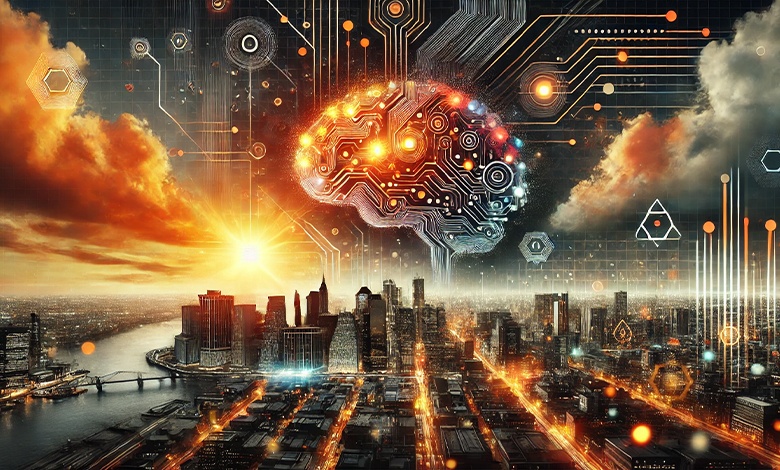
Artificial intelligence has moved from a distant concept to a central force shaping modern life. What was once limited to research labs is now embedded in everyday tools, from writing assistants and design software to customer service systems and personal productivity apps.
Companies like OpenAI have played a key role in accelerating this transformation. As AI technologies become more advanced and accessible, they are redefining how people work, create, and interact with information.
However, alongside the opportunities come important questions about the future of jobs, human creativity, and the role of technology in society.
From Innovation to Integration
Artificial intelligence is no longer just a technological breakthrough—it is becoming an integral part of daily workflows. Businesses across industries are adopting AI tools to automate repetitive tasks, analyze data, and improve decision-making.
From content creation to coding assistance, AI is helping individuals complete tasks faster and more efficiently. This shift is not limited to large corporations; small businesses and independent creators are also benefiting from these technologies.
The accessibility of AI tools has significantly lowered the barrier to entry for many professions. Tasks that once required specialized knowledge can now be supported by intelligent systems, allowing more people to participate in digital work.
Transforming the Nature of Work
One of the most significant impacts of AI is its effect on the workplace. Automation has long been part of technological progress, but AI introduces a new level of capability. Instead of replacing only manual labor, it is now influencing knowledge-based roles.
This transformation raises both optimism and concern. On one hand, AI can increase productivity, reduce workload, and create new opportunities. On the other, it challenges traditional job structures and requires workers to adapt.
Rather than eliminating work entirely, AI is reshaping it. Many roles are evolving to focus more on decision-making, creativity, and problem-solving—areas where human input remains essential.
Creativity in the Age of AI
A common concern is whether AI will replace human creativity. With tools capable of generating text, images, and music, the line between human and machine-created content is becoming less clear.
However, creativity is not only about output—it is also about intention, context, and meaning. AI can assist in the creative process, but it still relies on human direction and interpretation.
For writers, designers, and artists, AI can serve as a powerful tool rather than a replacement. It can help generate ideas, refine concepts, and streamline production, allowing creators to focus on higher-level thinking.
This collaborative relationship between humans and AI is likely to define the future of creative industries.
The Ethical and Social Questions
As AI becomes more integrated into society, it raises important ethical considerations. Questions about data privacy, bias, and accountability are becoming increasingly relevant.
AI systems are only as reliable as the data they are trained on. If that data contains biases, the outcomes can reflect those same issues. Ensuring fairness and transparency is therefore a critical challenge for developers and organizations.
There is also the question of responsibility. When AI systems make decisions or generate content, determining accountability can be complex. These issues highlight the need for clear guidelines and responsible use of technology.
Everyday Life in an AI-Driven World
Beyond the workplace, AI is shaping everyday experiences. From personalized recommendations on streaming platforms to smart assistants in homes, these technologies are becoming part of daily routines.
The convenience offered by AI is undeniable. It can save time, improve efficiency, and provide tailored experiences. However, it also changes how people interact with technology and information.
As reliance on AI grows, maintaining a balance between convenience and control becomes increasingly important. Users must remain aware of how these systems operate and how their data is used.
The Future of Human–Machine Collaboration
Looking ahead, the relationship between humans and AI is likely to become more collaborative. Rather than viewing AI as a competitor, many experts see it as a partner that enhances human capabilities.
In fields such as healthcare, education, and engineering, AI can support professionals by providing insights and reducing routine workload. This allows individuals to focus on complex and meaningful tasks.
The key to this collaboration lies in understanding the strengths and limitations of both humans and machines. While AI excels at processing data and identifying patterns, humans bring context, empathy, and critical thinking.
Adapting to a Changing Landscape
As technology continues to evolve, adaptability becomes essential. Individuals and organizations must be willing to learn new skills and embrace change.
Education and training will play a crucial role in this transition. Developing digital literacy and understanding how to work alongside AI will become increasingly important.
At the same time, policymakers and industry leaders must ensure that technological progress benefits society as a whole. This includes addressing challenges related to job displacement, access, and ethical use.