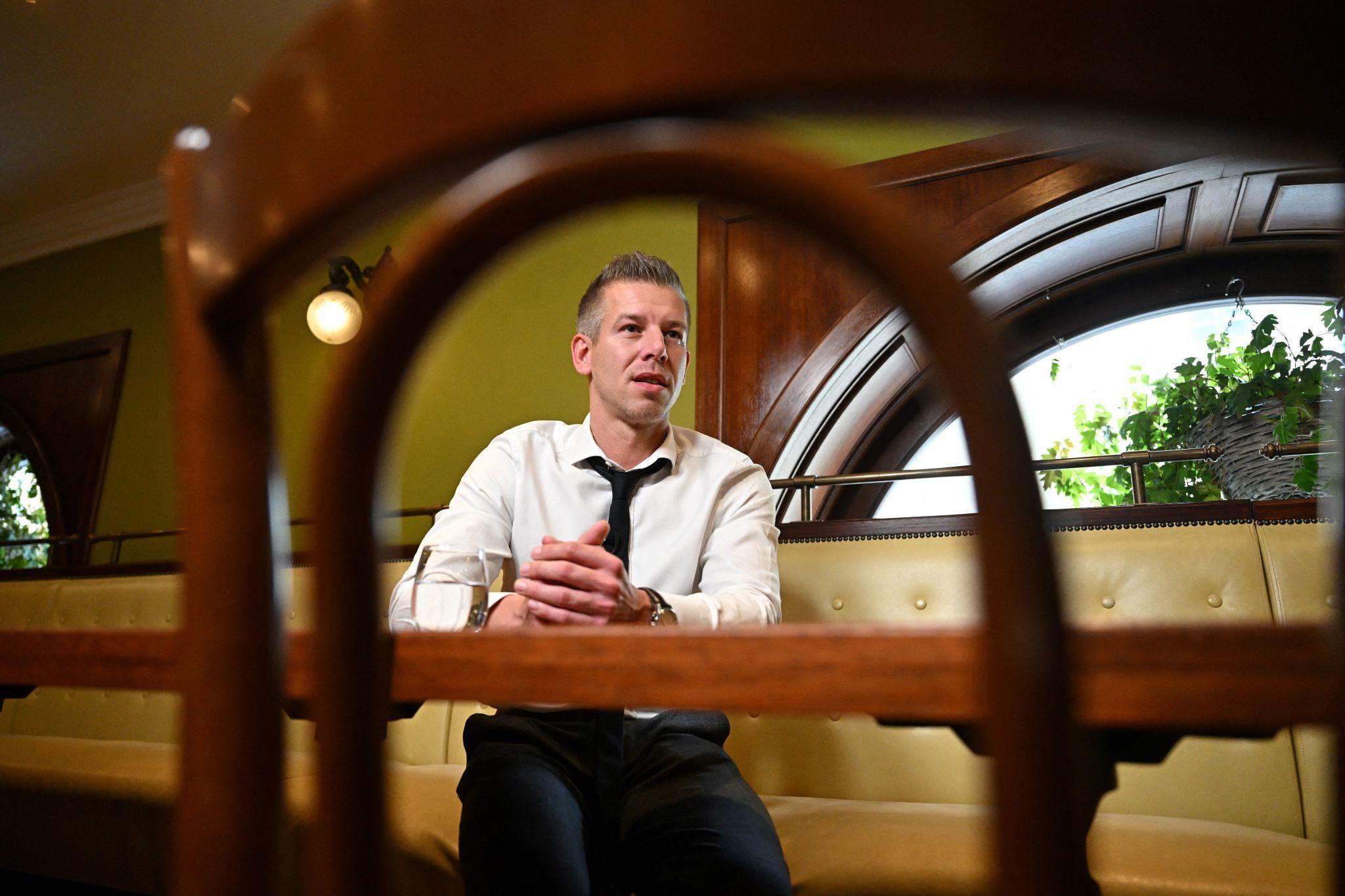
Sixteen years of rule by Viktor Orbán ended with a convincing defeat in Sunday’s elections. Electoral manipulation, electoral autocracy, the creation of electoral legislation tailored to his needs, constitutional and legal changes designed to extend his mandate—all of this this time worked in favor of the man who emerged from his own ranks. Péter Magyar will be the new Prime Minister of Hungary and the man tasked with repairing the damage inflicted on the country by Orbán.
A man who turned into the opposite of what he once stood for two decades ago, as a result of political intoxication. Voters grew tired of him. Of his party. Of misguided sovereignty, when people could no longer accept: “Let them steal, as long as they build,” or “Let them steal, as long as there is peace.”
On the eve of the elections in Hungary, the Gallup agency published results from a global survey conducted in 138 countries a few months earlier, showing that in Hungary the most important national problem is politics and the government. Government policy was seen as the main issue—even ahead of the economy, which globally ranks as the biggest concern.
The survey showed that the majority of Hungarians believe elections in the country are unfair. Hungary is one of only four EU countries where a minority believes elections are fair. Among the 27 EU member states, only Romanians and Bulgarians have less trust in elections than Hungarians. Hungarians are also dissatisfied with the economy, particularly with access to housing due to extremely high prices.
The survey also shows Hungary is politically divided. Supporters of the Fidesz party largely believe there is significant media freedom, that elections are fair, and that economic conditions are improving. Meanwhile, supporters of Tisza tend to claim that corruption is widespread in the government. The views of politically undecided voters lean closer to Tisza in this polarized environment. Pre-election polls confirmed that results would depend on roughly one-third undecided voters—and this proved true with high voter turnout.
People were not interested in Orbán’s statements about external threats to Hungary, the EU, or the war in Ukraine. This was reinforced by Magyar’s campaign. He precisely targeted the weak points of Orbán and Fidesz—corruption, the enrichment of Orbán and his family, his associates, and the appointment of unqualified individuals to high positions.
Meanwhile, ordinary Hungarians are becoming poorer. Viktor Orbán distanced himself from the people. In contrast, Magyar moved closer to them—just as Orbán himself once did when he first came to power. With populism, with identification with the common citizen, making them feel that the politician is not a god, but flesh and blood, sharing their concerns—at least until winning elections.
Magyar emphasized rising living costs, unemployment, and poor public services—healthcare, transport, education. People who know both Magyar and Orbán say that Magyar now sounds very similar to Orbán in 2010, when he campaigned with the same passion on economic issues and promised to improve the lives of ordinary Hungarians.
VON DER LEYEN BREATHED A SIGH OF RELIEF
Magyar’s victory gives ordinary Hungarians hope for change. But his election also has broader implications. The European Union could not tolerate Orbán due to his approach of defending Hungarian interests against European bureaucrats.
He openly told Ursula von der Leyen that she was on “his payroll,” hired by members of the European Council to lead the Commission. He vetoed several Commission decisions related to the war in Ukraine, its financing, and sanctions against Russia.
Since 2022, he met four times with Russian President Vladimir Putin. After his electoral defeat, von der Leyen breathed a sigh of relief and immediately stated that it is time to change EU rules—to prevent vetoes on certain decisions.
Now, major challenges lie ahead for Magyar. He shares many similarities with the man he seeks to replace. He opposes fast-track EU membership for Ukraine, rejects arms sales to Kyiv, and has suggested holding a referendum on Ukraine’s EU accession, which could block the process entirely.
His Tisza party also voted in the European Parliament against a €90 billion loan for Ukraine, even though Hungary was not expected to contribute financially. The party also voted against von der Leyen, resulting in sanctions from the European People’s Party.
Magyar is a nationalist who prioritizes Budapest’s interests. He criticized what he calls violations of the rights of the Hungarian minority in Ukraine, particularly regarding language, and referenced historical Hungarian cities in Ukraine.
“No one wants a pro-Ukrainian government in Hungary,” he says. Kyiv, on the other hand, hopes for normalized relations and sees the election results as “a defeat of blackmail politics and anti-Ukrainian propaganda.”
“WE HAVE GREAT POWER”
Magyar assured after his victory that Hungary will again become a reliable partner in the EU and NATO. This will be the true test of his leadership.
The Financial Times reported that the European Commission has opened “urgent talks” with Magyar, urging him to improve relations with Ukraine and initiate long-awaited reforms to unlock €35 billion in frozen EU funds for Hungary.
European officials acted quickly. They had anticipated Magyar’s victory and prepared an agenda for him. Negotiations have begun.
“If they fulfill their promises, we will fulfill ours,” said a senior EU official. Diplomats expect Hungary to lift its blockade on the €90 billion aid package for Ukraine and remove its veto on the 20th sanctions package against Russia—key signals of the new government’s willingness to repair relations with the EU.
The EU is in a hurry, as Ukraine could face a major financial crisis by May without foreign funding—affecting war efforts, pensions, social support, and public sector salaries.
Around €35 billion in EU funds for Hungary remain frozen due to disputes with Brussels and Orbán’s refusal to implement reforms. This includes €18 billion blocked over rule-of-law concerns, corruption risks, and undermining judicial independence, as well as over €17 billion in defense-related loans.
To unlock the funds, Hungary must meet 27 conditions, including anti-corruption measures, reversing controversial Orbán-era decisions, protecting minority rights, and ensuring academic freedom.
The European Commission also expects Hungary to comply with a ruling by the European Court regarding asylum laws, which currently cost Hungary €1 million per day in fines—nearly €900 million so far.
“We have great power. The pressure is on him, and I think he wants quick results,” said an EU representative.
“LET THEM STEAL, AS LONG AS THEY BUILD”
Magyar plans visits to Warsaw, Vienna, and possibly Brussels. He will have much to discuss—especially financial support. The funds are essential, and he will face pressure.
Hungary will continue buying Russian oil until 2035, maintaining a pragmatic policy. He will negotiate with Putin primarily over energy supplies, given Hungary’s dependence. Agreements on the expansion of the Paks nuclear power plant—built by Russian companies—will also be reviewed.
According to the Kremlin, Russia respects the choice of the Hungarian people and expects “pragmatic contacts” with the new leadership.
Finally, Orbán’s defeat is also seen as a defeat for Donald Trump—and a win for the European Union. Orbán had been expected to serve as a pillar of U.S. policy in Europe.
Magyar has already announced initial measures: anti-corruption reforms, a government asset recovery office, constitutional changes limiting prime ministers to two terms, strengthening rule of law, and restoring checks and balances.
Hungary will return to the International Criminal Court. However, budget problems remain, and unlocking EU funds will be urgent.
The developments in Hungary show that absolute power is not eternal—but the damage it leaves behind can be lasting.
Just as in the 1990s—and even today—when writing about Ukraine, one can easily think of Macedonia.
“Let them steal, as long as they build.”
One such figure, our own, is in Budapest.
“International criminals have no place in Hungary,” says Magyar—advising them not to buy furniture from IKEA, because they won’t need it.
Author: Mirche Adamchevski