The question looming over Tehran since the opening strikes in the ongoing conflict between Iran, the United States, and Israel is simple: who is in charge?
Formally, the answer appears clear. Mojtaba Khamenei assumed the role of Supreme Leader following the reported killing of his father, Ali Khamenei, on the first day of the war, February 28. Within the system of the Islamic Republic, this position is designed to be decisive. The Supreme Leader holds ultimate authority over key matters, including war, peace, and the country’s strategic direction.
In practice, however, the picture is far more complex.
Former U.S. President Donald Trump described Iran’s leadership as “fractured,” suggesting that Washington is waiting for Tehran to present a unified position. Iranian officials, meanwhile, have attempted to project unity, sending a nationwide message stating that “there is no such thing as hardliners or moderates in Iran—only one nation, one course.”
An Unseen Leader
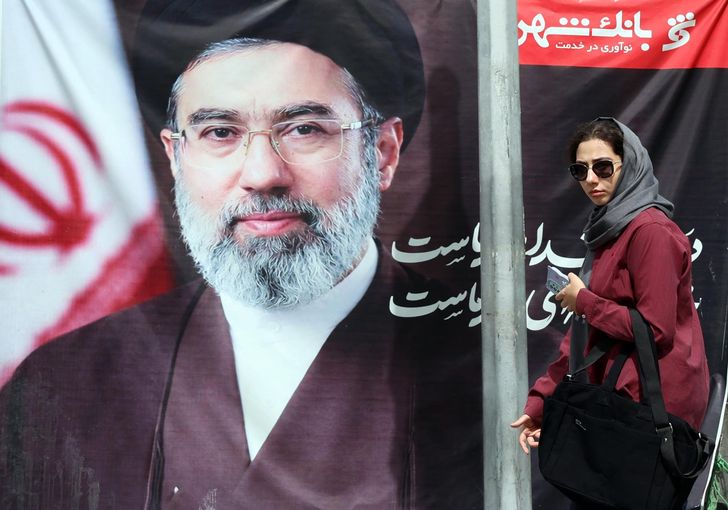
Since taking power, Mojtaba Khamenei has not appeared in public. Apart from a few written statements—including one insisting that the Strait of Hormuz remains closed—there is little direct evidence of his day-to-day leadership.
Iranian authorities have acknowledged that he was injured in the initial attacks but have provided few details. Reports cited by media outlets suggest he may have suffered multiple injuries, potentially affecting his ability to communicate.
This absence matters. In Iran’s political system, authority is not only institutional—it is also performative. Public speeches, appearances, and visible arbitration between factions have traditionally been key tools for signaling control. That signaling function now appears largely absent.
As a result, interpretation fills the gap. Some analysts argue that Khamenei has not yet had the opportunity to consolidate power. Others question whether his reported injuries may be limiting his ability to govern effectively.
Either way, decision-making appears less centralized than before the conflict.
Limited Diplomatic Momentum
On paper, diplomacy remains in the hands of the government. Foreign Minister Abbas Araghchi continues to represent Tehran in talks with the United States, under the leadership of President Masoud Pezeshkian.
However, neither figure appears to be setting overall strategy. Their authority is further complicated by the involvement of Parliament Speaker Mohammad Bagher Ghalibaf, who has taken a leading role in negotiations.
Araghchi’s role appears operational rather than directive. A recent reversal regarding the status of the Strait of Hormuz—initially suggesting traffic had resumed before quickly retracting—highlighted the limited control of diplomatic channels over military decisions.
President Pezeshkian, often viewed as a relatively moderate figure, has so far aligned with the broader direction of the system without visibly shaping it.
The stalled second round of talks with the United States in Islamabad reinforces this point: even when diplomatic channels are open, the system appears unable—or unwilling—to commit decisively.
Expanding Military Influence
Control over the Strait of Hormuz remains Iran’s most immediate source of leverage. However, decisions regarding its closure appear to fall under the authority of the Islamic Revolutionary Guard Corps (IRGC), reportedly led in this context by Ahmad Vahidi, rather than the diplomatic establishment.
This places significant power in the hands of actors operating largely behind closed doors. Unlike previous crises, no single, clearly identifiable figure appears to control overall strategy.
Instead, a pattern emerges: action first, messaging later—and not always consistently.
In practice, IRGC operations—whether enforcing the closure of Hormuz or targeting positions across the Gulf—seem to be setting the pace of the crisis. Political and diplomatic responses often follow rather than lead.
This does not necessarily indicate institutional breakdown, but it suggests that the IRGC’s operational autonomy has expanded, at least temporarily, in the absence of clear political arbitration.
Ghalibaf Steps Forward
Amid this ambiguity, Mohammad Bagher Ghalibaf has emerged as one of the most visible figures.
A former IRGC commander, now serving as parliament speaker, Ghalibaf has taken part in negotiations, addressed the public, and framed the conflict in pragmatic rather than purely ideological terms.
At the same time, resistance to negotiations remains strong within conservative circles. Hardline messaging has intensified, with state media increasingly portraying diplomacy as a sign of weakness.
Ghalibaf’s position, therefore, remains uncertain—active but not clearly mandated. He has stated that his actions align with the wishes of Mojtaba Khamenei, yet there is little visible evidence of direct coordination.
In a system that relies heavily on signals from the top, such ambiguity is significant.
A System Under Strain
Taken together, these dynamics point to a system that continues to function—but without clear, unified direction.
The authority of the Supreme Leader exists but is not visibly exercised. The presidency is aligned but not leading. Diplomacy is active but not decisive. The military holds key levers but lacks a clearly defined public architect. Political figures are stepping forward, but without undisputed legitimacy.
This does not amount to collapse. The Islamic Republic remains intact.
However, it suggests something more subtle: a system struggling to translate its power—such as the ability to close the Strait of Hormuz—into a coherent strategy under acute pressure.
For now, the system maintains control and avoids visible breakdown despite rising tension. But an increasingly important question remains: is coherence being actively maintained—or simply asserted?