The Union of Chambers of Commerce submitted a request to Greece a few days ago to postpone the implementation of the EES system during the summer period, in order to ease the expected influx of tourists from North Macedonia and Serbia and to avoid long waiting times at the border.
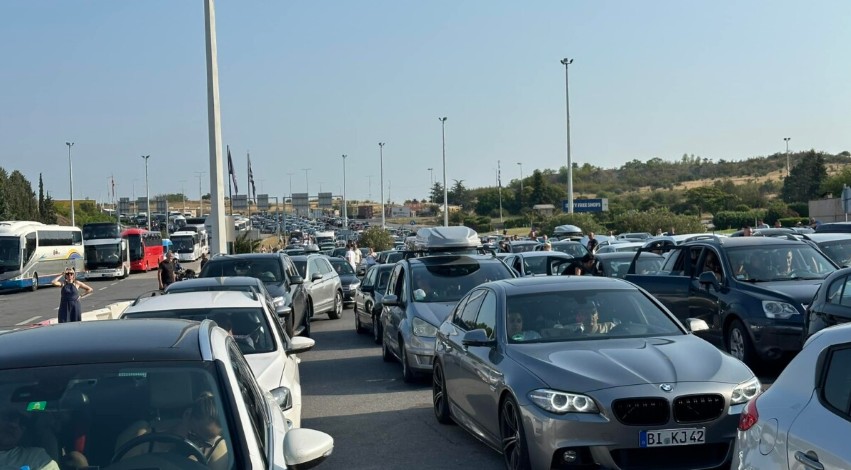
Speaking on the show Biznis 21 on TV21, Arkan Kerim, President of the Tourism and Hospitality Chamber within the Union, said that if Greece does not agree to the delay, waiting times at the border could stretch to dozens of hours in the best-case scenario.
“We have support from across northern Greece, especially from hoteliers, for this initiative to succeed. The EU allows certain member states, at specific times, to temporarily suspend the system and revert to the previous one, because this will be a serious problem. Airports are better equipped for such checks, but this involves cars. People travel en masse to Greece for summer holidays, and now each car carrying a family of four would require around 10 minutes for processing. That means only six vehicles per hour. We could face scenarios where people wait 10 to 12 hours at the border—and that would be considered a good scenario. There could be even longer delays,” Kerim said.
The Entry/Exit System (EES) is a new digital border management system introduced by the European Union, aimed at strengthening security and improving the monitoring of travelers entering and leaving the Schengen Area. The system will register personal data, travel documents, and biometric identifiers such as fingerprints and facial images of non-EU nationals.
While the EES is expected to enhance border control efficiency in the long term, experts warn that its initial rollout—especially during peak travel seasons—could significantly slow down border crossings at land checkpoints. Unlike airports, where infrastructure is more advanced and automated, land borders face logistical challenges due to the high volume of vehicles and limited processing capacity.
Tourism stakeholders across the region have expressed concerns that prolonged waiting times could discourage travelers, impact holiday plans, and negatively affect the tourism industry in countries heavily reliant on summer visitors. As a result, calls for a phased or delayed implementation during peak months are growing stronger, particularly from businesses in Southeast Europe.
Authorities are yet to make a final decision, but discussions between stakeholders and EU institutions are ongoing, with the aim of finding a balance between security requirements and the smooth flow of tourists during the busy summer season.