
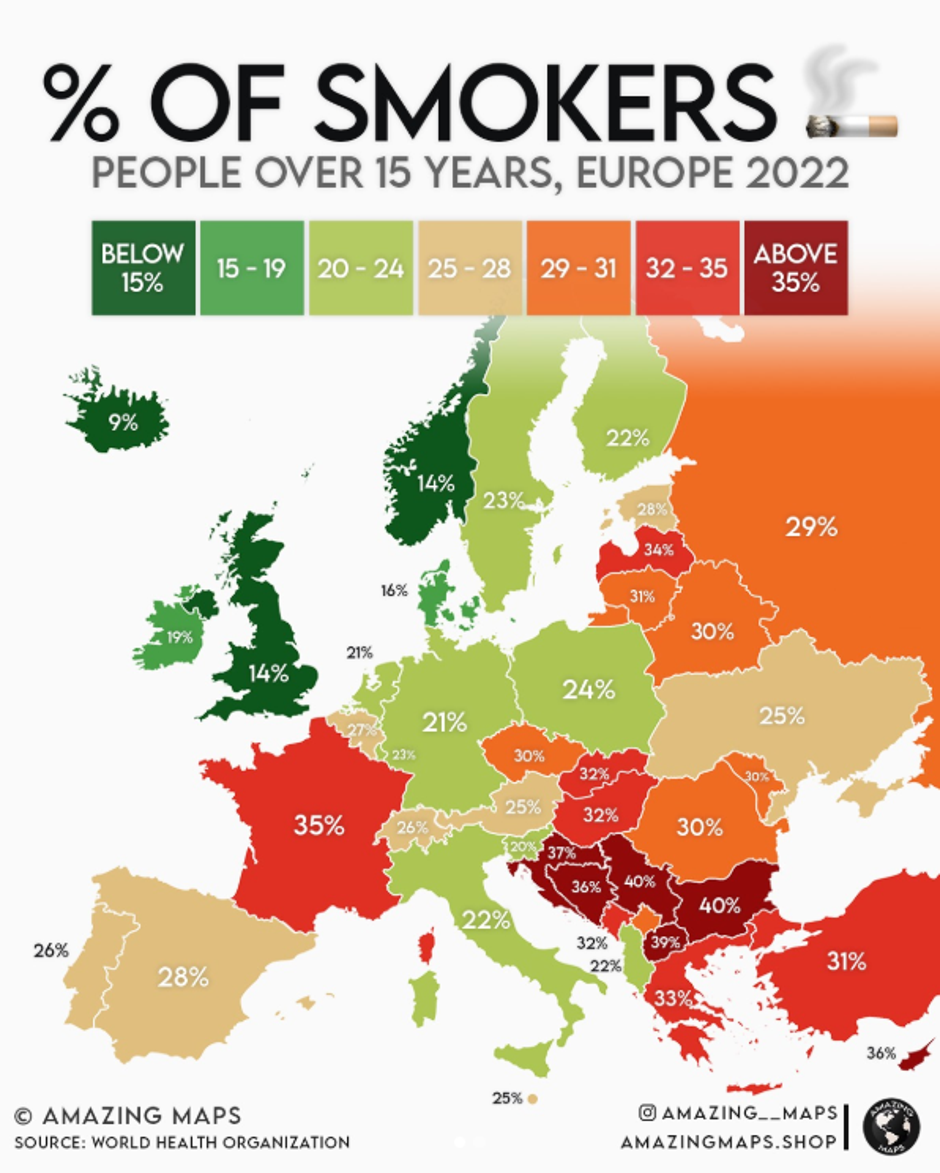
A recently published map of Europe has drawn significant attention after revealing concerning data about risk levels across different regions of the continent. According to the visual analysis, large parts of Southeastern Europe are marked in red, indicating a higher level of potential risk compared to other areas. The map divides Europe into several zones, using color codes to represent different levels of risk. Red areas indicate the highest level, while orange represents moderate risk, and green marks regions considered relatively safe.
Balkan Region Among the Most Exposed
One of the most striking aspects of the map is the concentration of red zones across the Balkan region. Countries such as Croatia, Bosnia and Herzegovina, Albania, North Macedonia, Greece, and parts of Turkey are all highlighted as areas with elevated risk levels. This has raised concerns among observers, especially given the region’s history of seismic activity. While such maps are not new, the visual representation has once again brought attention to the vulnerability of these areas.
Safer Regions in Northern and Western Europe
In contrast, large parts of Northern and Western Europe are marked in green, indicating relatively low levels of risk. Countries such as Ireland, the United Kingdom, and much of Scandinavia appear among the safest zones on the map. Central European countries fall somewhere in between, often marked in orange, suggesting moderate risk depending on specific local conditions.
Experts Urge Caution in Interpretation
Despite the alarming appearance of the map, experts emphasize that such visual data should be interpreted carefully. The complexity of geological structures means that not all areas can be assessed with complete accuracy. In some cases, irregular fault lines and older, inactive geological formations may not be fully represented, which could lead to slight inaccuracies in certain regions.
Why This Matters
The renewed attention to seismic risk highlights the importance of preparedness and infrastructure resilience. Countries in higher-risk zones often invest more in building standards and emergency response systems to reduce potential damage. Public awareness is also a key factor. Maps like this serve as a reminder of the importance of understanding natural risks and taking appropriate precautions.