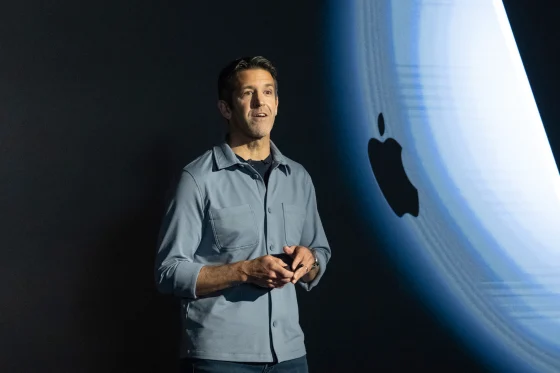
John Ternus, a veteran of Apple, will take over the $4 trillion company as CEO on September 1.
“Having spent nearly my entire career at Apple, I’ve been fortunate to work under Steve Jobs and to have Tim Cook as my mentor,” he said in a statement to the media on Monday, announcing his new role.
Here’s what you need to know about Apple’s new CEO.
What does he do?
Ternus knows Apple at its core. He currently serves as Senior Vice President of Hardware Engineering, according to Apple’s website. This means he has led hardware engineering behind Apple’s most recognizable products, such as the iPhone and Mac, as well as newer innovations like the Apple Vision Pro.
He has played a major role in new product lines for Mac, AirPods, and iPhone. His team was essential in developing the new MacBook Neo and the iPhone 17 lineup, Apple said.
How long has he been at Apple?
Ternus has spent a quarter of a century at Apple. He joined the company’s product design team in 2001 and eventually became Vice President of Hardware Engineering in 2013. Apple promoted him to the executive team in 2021, when he became Senior Vice President of Hardware Engineering.
Before joining Apple, he worked as a mechanical engineer at Virtual Research Systems and graduated in mechanical engineering from the University of Pennsylvania, according to the press release.
His latest promotion is not a big surprise—he had been considered a leading candidate for CEO since at least last year.
What’s on his plate?
Ternus certainly has big shoes to fill. Cook has been CEO since 2011 and led the company to a $4 trillion market capitalization in the post-Jobs era.
A major question mark surrounding Ternus is Apple’s efforts in artificial intelligence.
“Cook leaves a lasting legacy in Cupertino, and there will be significant pressure on Ternus to deliver success from day one, especially on the AI front,” said analyst Dan Ives in a note on Monday.
While Jobs was known for taking risks, Cook found consistent success in services built on existing products, such as the Apple Watch, AirPods, and Apple TV+.
It will be up to Ternus to decide which path to take—and whether Apple can create the next big thing in the volatile AI landscape.
“Ternus is a hardware engineer, which signals that Apple will seek differentiation in its physical products even as it reimagines the device as a platform for intelligent experiences,” said Dipanjan Chatterjee, a principal analyst at Forrester Research.
What challenges lie ahead?
Beyond artificial intelligence, Ternus will also face challenges related to global competition, supply chain stability, and maintaining Apple’s premium brand image in an increasingly saturated market. Rivals are investing heavily in innovation, particularly in AI-powered devices and services, which means Apple must move faster without compromising its design philosophy.
Another key test will be balancing innovation with consistency. Apple users expect both groundbreaking products and a seamless ecosystem, putting pressure on Ternus to deliver improvements that feel both new and familiar.
Ultimately, his success will depend on whether he can combine Apple’s strong hardware legacy with next-generation intelligent software—and define the company’s direction in a rapidly evolving tech landscape.