
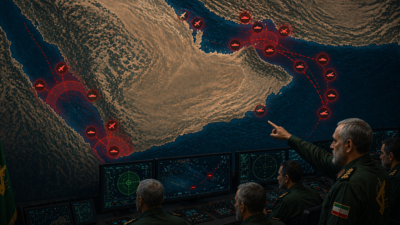
Tensions in the Middle East have risen sharply after Iran issued a strong warning that it could block key maritime routes if the United States continues its naval restrictions on Iranian ports. The statement has raised concerns among global markets and policymakers, as any disruption in these waters could have far-reaching consequences.
The Persian Gulf, the Gulf of Oman, and the Red Sea are among the most important trade corridors in the world. A potential blockade in these regions would not only affect regional stability but could also disrupt global energy supplies and international trade.
Iran’s Warning and Strategic Position
According to reports from Iranian media, a senior military official stated that Tehran could take decisive action if U.S. measures against its maritime activities continue. The warning reflects growing frustration over what Iranian authorities describe as unlawful restrictions affecting their commercial shipping.
Iran has emphasized that continued pressure could lead to a broader response, including measures that would impact international trade routes. Officials indicated that such actions would be considered a response to ongoing tensions rather than an escalation initiated by Tehran.
The statements highlight how sensitive the situation has become, with both sides closely monitoring developments.
Why These Waterways Matter
The regions mentioned in Iran’s warning are among the most strategically important in the world. The Persian Gulf and the Strait of Hormuz, in particular, serve as major channels for global oil transportation.
A significant portion of the world’s energy supply passes through these waters every day. Disruptions in these routes can quickly affect global markets, leading to price increases and uncertainty. The Red Sea is another critical corridor, connecting Europe with Asia through the Suez Canal. Any instability in this region can have immediate effects on shipping routes and delivery times. Because of their importance, these waterways are closely monitored by international actors, making any potential disruption a major concern.
Potential Impact on Global Trade
If maritime routes were to be restricted or blocked, the impact on global trade could be substantial. Shipping delays, increased transportation costs, and reduced supply of key commodities are among the most immediate risks.
Energy markets are particularly sensitive to such developments. Oil and gas prices tend to react quickly to geopolitical uncertainty, and even the possibility of disruption can lead to volatility In addition to energy, other industries could also be affected. From manufacturing to retail, many sectors rely on stable and predictable shipping routes to maintain supply chains.
A prolonged disruption could therefore have wider economic consequences beyond the region.
Market Reactions and Economic Concerns
Financial markets often respond rapidly to geopolitical developments. In situations like this, investors tend to shift toward safer assets, while risk-sensitive sectors may experience declines. Energy prices, in particular, can become more volatile. Even small changes in supply expectations can lead to noticeable price movements, affecting both businesses and consumers.
For households, this could translate into higher fuel and transportation costs. For companies, it may result in increased operating expenses and potential delays in deliveries.
These factors highlight how closely global markets are tied to stability in key regions.
Calls for Stability and Diplomatic Solutions
Amid rising tensions, there are growing calls from international observers for restraint and dialogue. Maintaining stability in critical maritime routes is seen as a shared interest for many countries.
Diplomatic efforts are often viewed as the most effective way to prevent escalation. While disagreements remain, avoiding disruptions in global trade is a priority for the broader international community.
In complex situations like this, communication between parties plays a crucial role in reducing uncertainty and preventing misunderstandings.
A Region Under Pressure
The Middle East has long been a region of strategic importance, and recent developments have added further pressure. Political, economic, and security factors are all contributing to the current situation.
At the same time, global dependence on energy resources from the region continues to make stability essential. Any shift in the balance can have immediate global implications.
This interconnectedness means that regional events are rarely isolated, often influencing markets and policies far beyond the area.