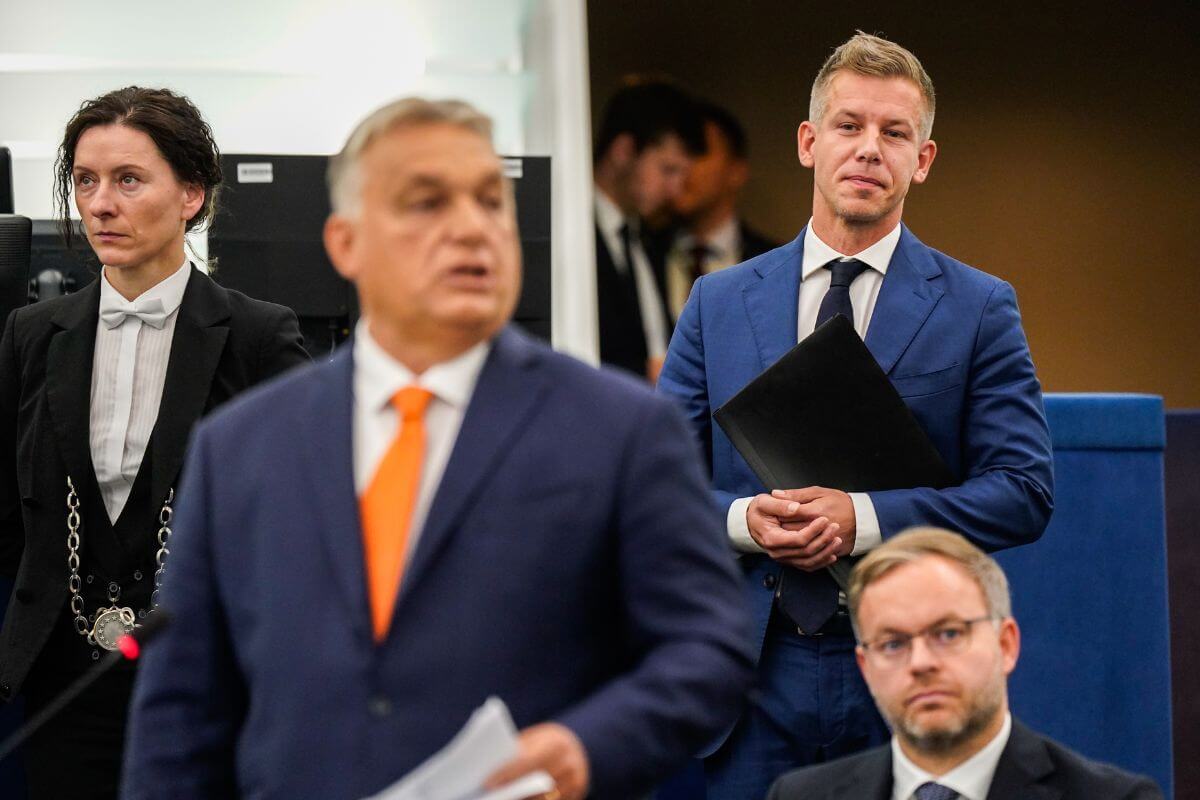
Hungary’s Prime Minister Viktor Orbán has conceded defeat in the country’s parliamentary elections, following a strong showing by opposition leader Péter Magyar. Magyar announced that Orbán personally acknowledged the outcome during a phone call, stating on social media that the prime minister had congratulated him on the victory.
In his post-election address, Orbán described the result as “clear,” admitting that his party had not secured a mandate to continue governing after 16 years in power.
“The result is painful for us, but clear,” he said, confirming that he had congratulated the winning side. Partial official results indicate that Magyar’s Tisza Party has taken a significant lead over Orbán’s ruling Fidesz, marking a major political shift in the country.
Results Show Strong Lead
With approximately 85 percent of votes counted, Tisza has secured around 53 percent of the vote, compared to 37 percent for Fidesz. These figures are expected to evolve as counting continues. According to preliminary projections from the national election office, Tisza could win around 135 seats in the 199-member parliament, potentially securing a two-thirds majority. Such a result would allow the new leadership to implement significant institutional reforms.
European Reaction
Ursula von der Leyen reacted to the developments by emphasizing Hungary’s place within Europe.
“Europe’s heart beats stronger tonight in Hungary,” she wrote, adding that the country is reaffirming its European direction.
A victory for Tisza could signal a shift in Hungary’s relationship with the European Union, potentially easing tensions that have characterized recent years. It may also reopen discussions on broader European initiatives, including financial and strategic cooperation within the bloc.
Voter turnout reached over 77 percent by early evening, marking one of the highest participation rates in Hungary’s post-communist history. Both major parties reported alleged irregularities during the voting process, suggesting that some results could face challenges.
Who Is Péter Magyar?
Péter Magyar, a former insider within the political establishment, emerged as a key opposition figure in recent years. After distancing himself from the ruling party, he formed a pro-European, center-right movement that quickly gained support. His political rise has been closely followed since his party’s strong performance in the 2024 European elections.
Magyar has emerged as a central figure in Hungary’s political shift, gaining support from voters frustrated with economic stagnation, rising living costs, and corruption concerns.
The 45-year-old lawyer was, until recently, closely linked to the political establishment built by Viktor Orbán. He held roles connected to state institutions and was widely known as the husband of former Justice Minister Judit Varga, a prominent member of the ruling Fidesz.
Rise to Prominence
Magyar gained national attention in early 2024 during a political scandal that led to Varga’s resignation. The controversy centered around a presidential pardon case that sparked public backlash.
Shortly afterward, Magyar released an audio recording of a private conversation, which he said provided evidence of alleged interference by senior officials in a separate corruption case. The move marked a dramatic break from the ruling elite and propelled him into the political spotlight.
He then took leadership of the relatively unknown Tisza Party, rapidly transforming it into a significant political force through an energetic campaign and public appearances.
Rapid Political Growth
Analysts have highlighted the speed of his rise.
“An opposition movement has been built at an unprecedented pace,” said Gábor Győri of Policy Solutions, noting that such rapid growth has rarely been seen in Hungary’s post-transition political landscape.
Key Policy Positions
Magyar has pledged to reverse several controversial policies introduced during Orbán’s tenure.
His priorities include restoring democratic checks and balances, improving relations with the European Union, and unlocking frozen EU funds. One of his proposed early steps would be joining the European Public Prosecutor’s Office (EPPO).
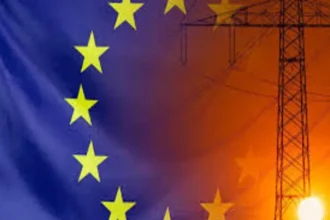
He has also committed to reducing Hungary’s dependence on Russian energy by 2035, aligning broadly with European energy transition goals.
Areas of Continuity and Difference
Despite his criticism of Orbán, Magyar shares similar positions on certain issues. On migration, he has signaled a stricter approach, including ending programs that allow foreign workers into the country. He has also expressed opposition to the EU’s migration pact. Regarding Ukraine, Magyar is expected to maintain Hungary’s stance against sending weapons and has shown caution toward accelerated EU membership for Kyiv.
While some analysts believe Hungary could become a more predictable partner within the European Union under new leadership, others note that Magyar’s positions remain less defined on certain social issues.
According to observers, he has largely avoided addressing topics related to gender and minority rights, leaving questions about his future policies in these areas.
Political Positioning
Magyar is not typically described as a liberal politician. He has previously criticized opposition groups that challenged Orbán in earlier elections.
Data from voting patterns in the European Parliament suggests that members of the Tisza Party align broadly with pro-European positions, while occasionally taking stances similar to Fidesz on sensitive issues such as migration, agriculture, and foreign policy.
Hungary’s Electoral System Turns Against Orbán as Opposition Gains Ground
Hungary appears to be undergoing a significant political shift, as an electoral system long associated with Viktor Orbán may now be working in favor of his main opponent, Péter Magyar.
The system, shaped over years under Orbán’s leadership, was designed to amplify electoral victories and secure stable parliamentary majorities. However, recent developments suggest that the same structure could now benefit the opposition.
The Role of the “Winner Compensation” System
At the center of this shift is a mechanism often referred to as “winner compensation,” which awards additional mandates to the party that finishes first in the election.
In previous election cycles, this rule helped Orbán’s Fidesz transform modest vote leads into dominant parliamentary majorities. With just over half of the popular vote, the ruling party was often able to secure a two-thirds majority—enough to amend the constitution and reshape key institutions.
The current election results suggest that this dynamic may now be reversed. With Magyar’s Tisza Party emerging as the leading force, the same electoral mathematics could significantly amplify its parliamentary representation. Even a relatively narrow lead in vote share may translate into a disproportionately larger number of seats, potentially bringing the opposition closer to a two-thirds majority.
Why a Two-Thirds Majority Matters
In Hungary’s political system, a two-thirds majority carries substantial weight. It enables the governing party to implement constitutional changes, restructure institutions, and influence long-term governance frameworks.
Over the years, such a majority allowed Orbán’s government to introduce structural changes that shaped the country’s political and institutional landscape. If the opposition achieves a similar level of support, it could open the door to revisiting key aspects of governance, including institutional balance, regulatory frameworks, and electoral rules.
A Structural Irony
The situation highlights a broader irony in political system design. An electoral framework originally intended to secure long-term dominance for one political force is now positioned to potentially enable a historic shift in power.
This development illustrates how systems tailored for stability under one set of conditions can produce unexpected outcomes when political dynamics change.