Gold prices declined on Monday, pressured by growing inflation concerns and escalating geopolitical tensions after U.S.–Iran peace talks ended without an agreement. The situation intensified further as the United States announced a blockade of the Strait of Hormuz, deepening the global energy shock.
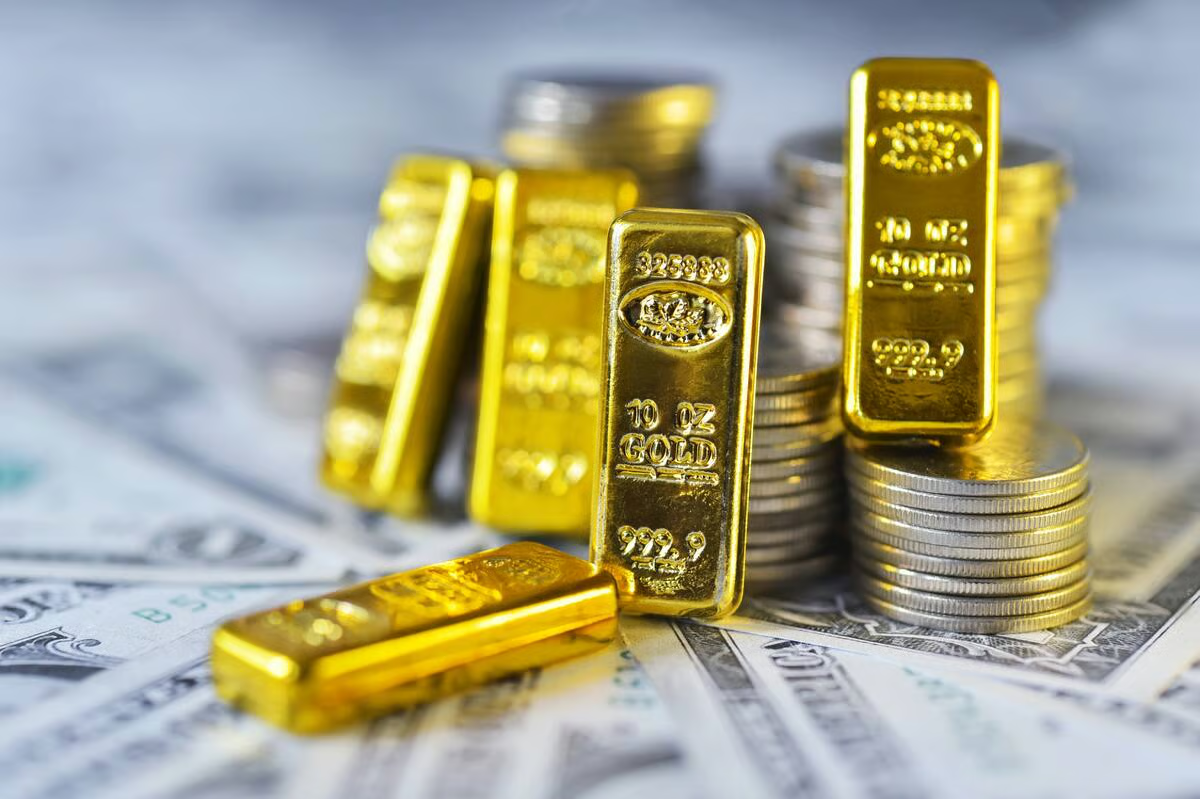
The price of gold dropped by as much as 2.2% במהלך the day, briefly falling below $4,650 per ounce before recovering part of its losses later in the session.
Failed Talks and Strategic Tensions
The U.S. military confirmed that the blockade would begin at 10 a.m. Eastern Time, following unsuccessful weekend negotiations with Iran. The talks had aimed to transform a fragile ceasefire into a more lasting agreement after six weeks of conflict in the Middle East.
At the same time, oil and natural gas prices surged sharply, reflecting fears of supply disruptions. Donald Trump also stated that the United States would intercept any vessel paying Iran for passage through the Strait of Hormuz—a critical maritime route connecting the Persian Gulf with global markets.
Before the conflict, approximately one-fifth of the world’s trade in crude oil and liquefied natural gas passed through this strategic chokepoint.
Market Reaction and Investor Sentiment
Analysts warn that developments over the weekend have further destabilized an already fragile ceasefire and increased the likelihood of a prolonged conflict. However, some note that gold’s reaction has been more subdued compared to earlier stages of the crisis.
The decline in gold was also influenced by a strengthening U.S. dollar and falling equity futures. Because gold is priced in dollars, a stronger currency typically reduces its attractiveness for international investors.
Additionally, rising energy prices have reignited concerns that central banks may keep interest rates higher for longer—or even increase them further.
Inflation Pressures Weigh on Gold
Higher interest rates are generally unfavorable for gold, as the metal does not offer yield and tends to perform better in low-rate environments.
Early estimates of the conflict’s impact on the U.S. economy already indicate rising inflation. According to recent data from the U.S. Bureau of Labor Statistics, inflation recorded its largest increase in nearly four years in March, with surging gasoline prices accounting for a significant portion of the monthly rise.
Analysts believe that elevated inflation expectations are complicating the outlook for the Federal Reserve’s monetary policy, reinforcing the “higher for longer” interest rate scenario.
In such an environment, gold remains caught between two opposing forces: geopolitical support on one side and macroeconomic pressure on the other.
Gold’s Performance Since the Start of the Conflict
Since the conflict began in late February, gold has lost around 10% of its value. In the early weeks, some investors sold the precious metal to cover losses in other markets.
More recently, however, gold has partially recovered as concerns about slowing economic growth increased, renewing its appeal as a safe-haven asset.
Later on Monday, spot gold prices were down 0.4%, trading at $4,729.02 per ounce.
Meanwhile:
- Silver fell 1.8% to $74.53
- Platinum remained largely unchanged
- Palladium posted a slight gain