
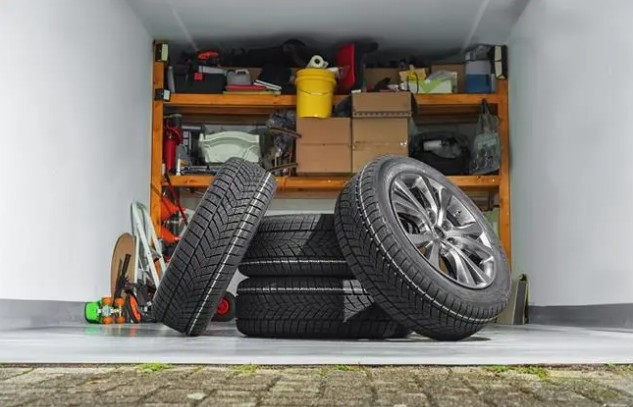
As temperatures rise and drivers switch from winter to summer tires, many overlook one important step—proper storage. Leaving winter tires in a corner of a garage or basement without preparation can significantly reduce their lifespan and performance. Experts emphasize that correct storage is essential not only for preserving the quality of tires but also for ensuring safety on the road when the next winter season arrives.
Why Proper Storage Matters
Winter tires are made from specialized rubber compounds designed to perform in low temperatures. When exposed to heat, sunlight, and humidity for extended periods, this material can degrade, leading to cracks, loss of flexibility, and reduced grip.
Improperly stored tires may become unusable, forcing drivers to invest in a new set much sooner than expected. In contrast, well-maintained tires can last for several seasons without losing their effectiveness.
Step 1: Clean and Inspect Your Tires
Before storing your tires, it is essential to clean them thoroughly. During winter, tires collect dirt, salt, and small debris, all of which can damage the rubber over time.
Wash them with water and mild detergent, and make sure to remove stones or particles trapped in the grooves. After cleaning, allow the tires to dry completely to prevent moisture-related damage.
At the same time, inspect each tire carefully. Look for cracks, cuts, or uneven wear. If you notice significant damage, it may be safer to replace the tire before the next season.
Step 2: Mark Their Position
A simple but useful step is to mark the position of each tire (for example, front-left or rear-right). This allows for proper rotation in the next season, helping ensure even wear and longer lifespan.
Step 3: Choose the Right Storage Conditions
The environment where you store your tires plays a crucial role in their durability.
Ideally, tires should be kept in a:
– cool place (around 15°C)
– dry environment
– dark space, away from direct sunlight
Exposure to heat, UV rays, and moisture can accelerate the aging process of rubber and reduce performance.
It is also important to keep tires away from chemicals such as oils, fuels, and solvents, as these substances can damage the rubber structure.
Step 4: Store Them Correctly
The way you position your tires also matters:
Tires with rims: can be stacked or hung
Tires without rims: should be stored upright, not stacked
Incorrect positioning can lead to deformation, which affects how the tires perform when reinstalled.
Additionally, avoid placing tires directly on concrete floors. Instead, use cardboard, wood, or a protective surface.
Common Mistakes to Avoid
Many drivers make simple mistakes that can shorten the life of their tires:
-storing them in direct sunlight
-leaving them in humid basements
-placing heavy objects on top of them
-skipping cleaning before storage
Even small oversights can lead to long-term damage.
Conclusion
Proper storage of winter tires is a simple but important step that can save money and improve safety. With a little preparation and the right conditions, drivers can extend the lifespan of their tires and avoid unnecessary expenses.
Taking care of your tires today means better performance—and fewer costs—when winter returns.